Working Late Night Shifts? Here's What Your Late-Night Schedule Is Doing to Your Biomarkers

Written By
Healthvizor

It’s 1 a.m. The Slack channel is still alive, the deploy is finally green, and you’re four cups of coffee deep. You’ll sleep around 2:30, wake at 10, and do it all again tomorrow. You tell yourself it’s just for this sprint.
Inside your body, a quieter story is unfolding. Your cortisol curve is inverting. Your insulin is creeping up. Your inflammation markers are slowly rising. And by the time anything shows up on an annual report, several years have usually already gone by.
What late-night work actually does to your body
Decades of research on shift workers have given us a remarkably consistent picture of what happens when human biology runs on the wrong clock. Tech workers, founders and remote teams working across time zones are not formally classified as shift workers, but biologically they often experience similar patterns.
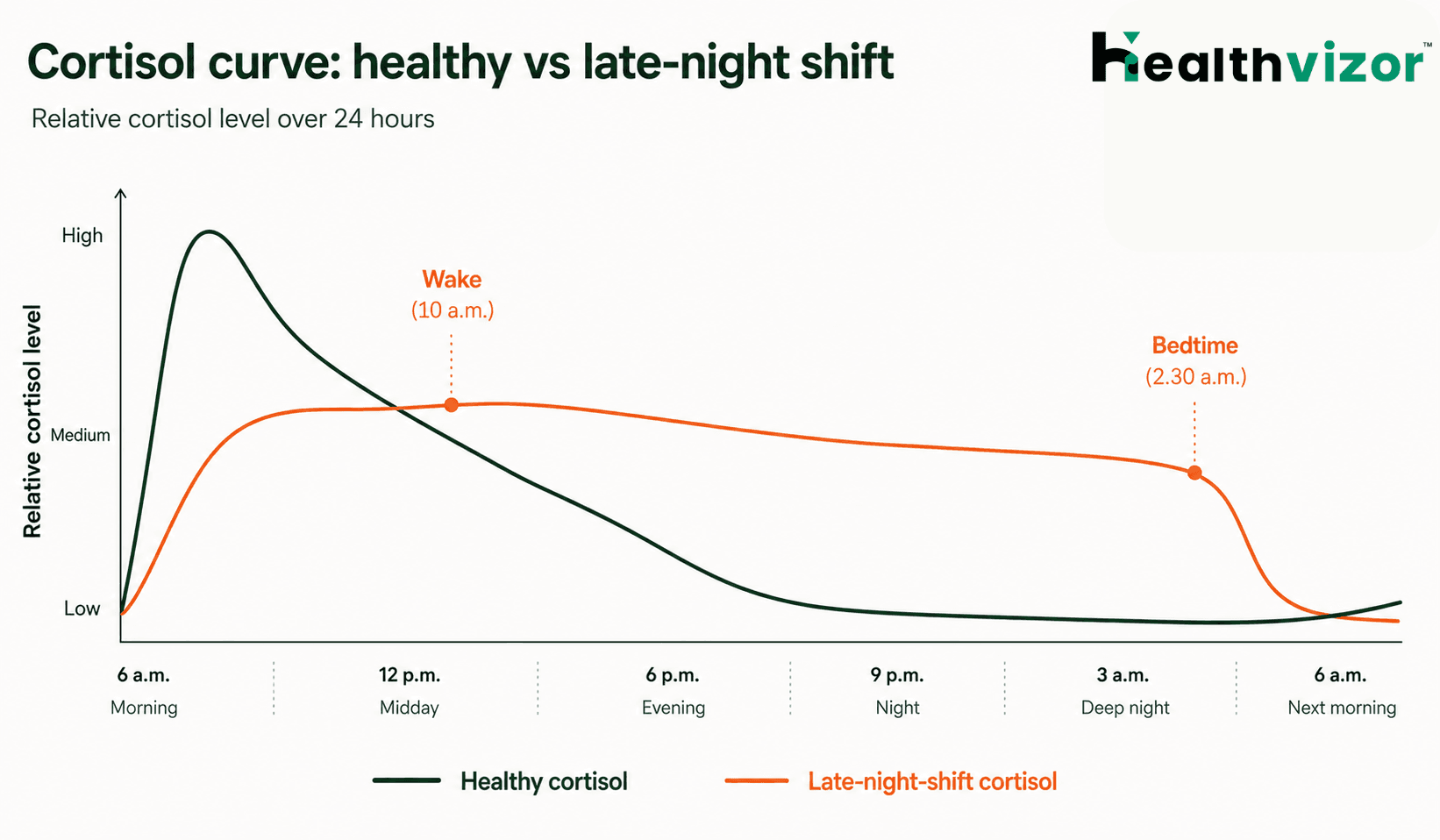
Studies on night-shift work consistently show increased cardiometabolic strain over time. One of the most common patterns is a flattened cortisol curve, where morning cortisol does not rise normally and night-time cortisol remains elevated longer than it should.
The cortisol curve, in plain English
Healthy cortisol follows a rhythm. It spikes shortly after waking, gradually falls through the day, and reaches its lowest point before sleep. That rhythm helps you feel alert in the morning and sleepy at night.
When your sleep timing shifts later, that curve can flatten or invert. Morning energy feels dull, evening alertness stays elevated, and “tired but wired” becomes a familiar pattern. It is measurable, and in many cases, reversible.
What this is doing in your bloodwork
Many early markers still appear “normal” on routine annual bloodwork. A deeper biomarker panel often reveals subtle shifts much earlier.
- Fasting insulin and HOMA-IR
- hs-CRP
- Cortisol AM
- DHEA-S
- Ferritin and thyroid markers
- Triglyceride / HDL ratio
How to structure a late-start day for performance
Moving back to a conventional schedule is ideal, but not always realistic. The next best strategy is consistency and protecting your late schedule from unnecessary disruption.
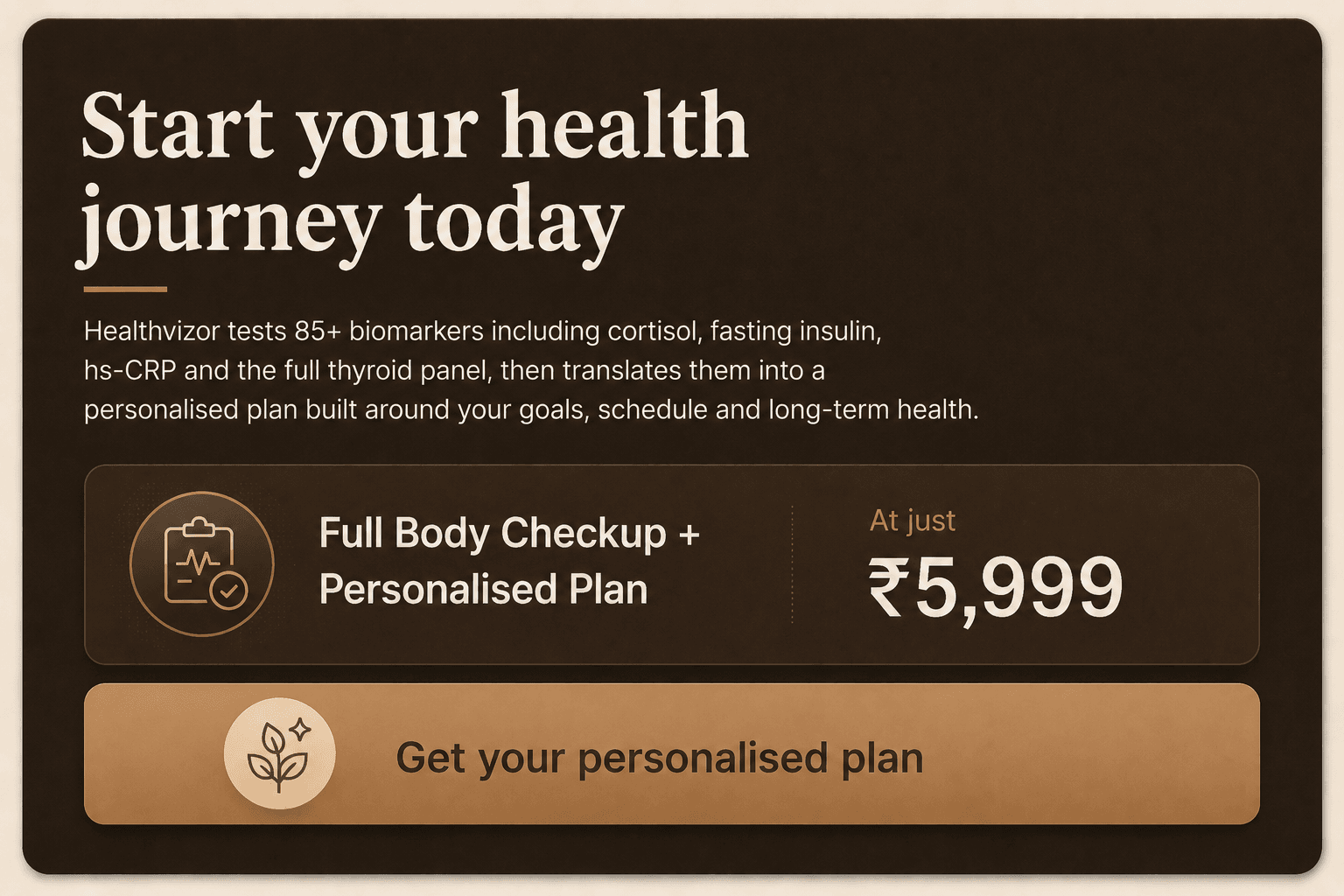
Anchor wake time, then anchor light
Pick a wake time you can maintain every day. Get bright outdoor light soon after waking. Even cloudy daylight is significantly brighter than indoor lighting and helps reinforce circadian rhythm.
A consistent wake time combined with morning light helps regulate your cortisol curve, improves sleep timing and makes energy feel more predictable through the day.

Eat in a narrower window
Eating later into the night increases metabolic strain. Even reducing the eating window to around 10 hours can support insulin sensitivity and improve energy stability.
Hard cap on caffeine
Caffeine has a long half-life. Cutting it after lunch can improve sleep quality meaningfully, even if you do not feel immediately sensitive to it.
Protected wind-down
Dim lights after 9 p.m., reduce screens before bed and keep your wind-down routine consistent. Small signals repeated daily are often what help the body recalibrate.
Sedentary all-night work is its own risk factor
Even with good sleep habits, long periods of uninterrupted sitting create their own metabolic strain. A morning workout helps, but movement throughout the day matters more than most people realise.
Standing up every 30 to 45 minutes supports circulation, restores muscle activity and helps improve insulin sensitivity across the day.
What to test and how often
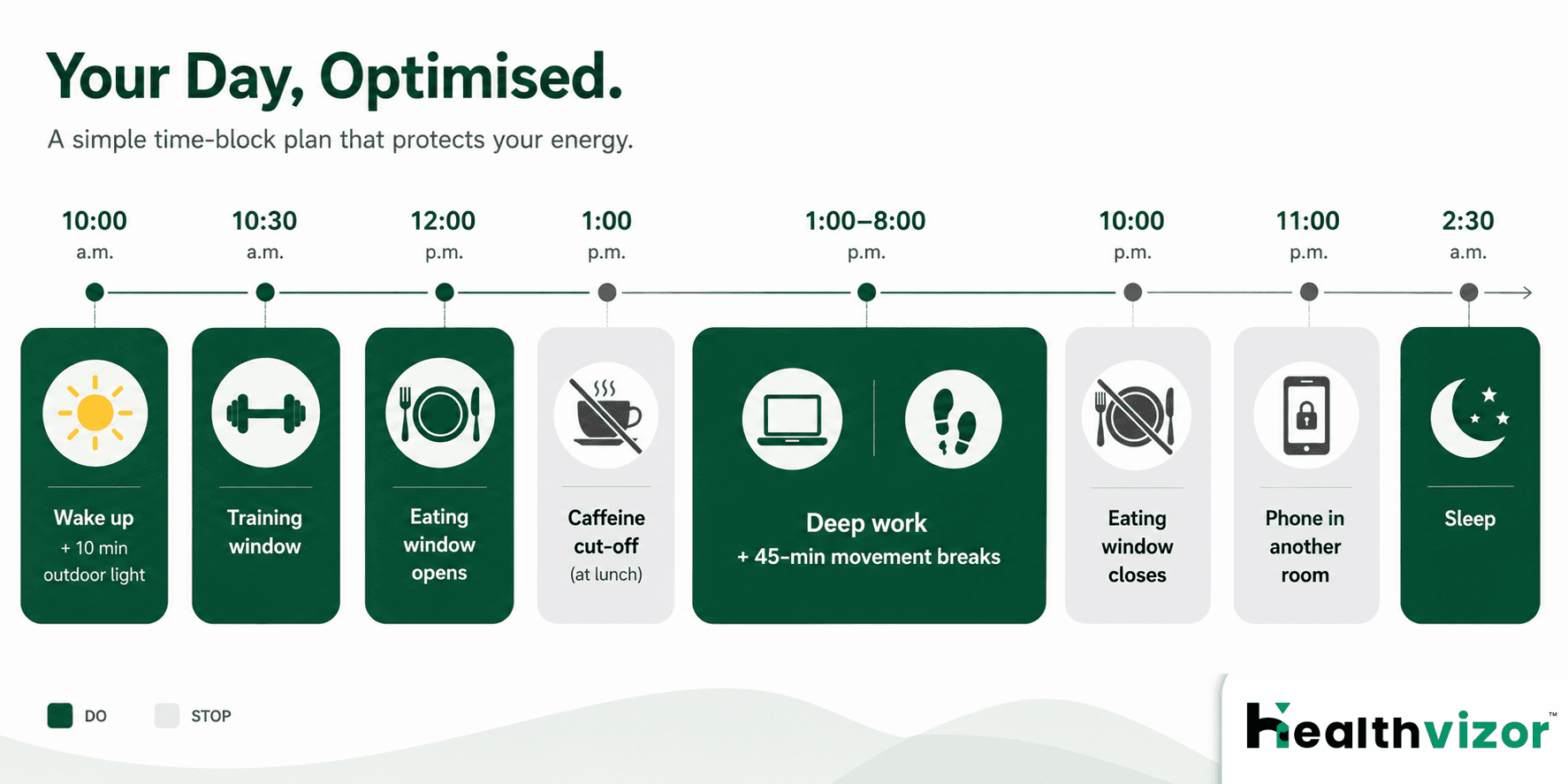
A strong baseline panel can help identify early shifts before symptoms become obvious. The goal is not just catching disease, but spotting trends early enough to change direction.
Useful markers include fasting insulin, HOMA-IR, HbA1c, ApoB, hs-CRP, homocysteine, vitamin D, B12, ferritin, a full thyroid panel, cortisol AM and DHEA-S.
Re-testing in 90 days after making changes helps create a clearer before-and-after picture. From there, quarterly or six-monthly follow-ups are usually enough depending on results.
The 30-day reset
Week 1: Anchor wake time, get morning light and cut caffeine after lunch.
Week 2: Compress the eating window and add short walks after meals.
Week 3: Move workouts earlier in the day and protect a stronger evening wind-down.
Week 4: Re-test key markers and track what changed.
The body responds faster than many people expect, especially when the schedule becomes more consistent.
How Healthvizor helps
Healthvizor’s panel is built for professionals managing long hours and late schedules. It tracks 85+ biomarkers including cortisol, fasting insulin, hs-CRP, thyroid markers and DHEA-S against optimal ranges, with personalised recommendations designed around what actually moves those numbers.
Late nights do not automatically mean poor health. But measuring what they are doing early gives you a much better chance of staying ahead of the long-term effects.
References
1. Association between night shift work and cardiovascular disease A systematic review and dose response meta analysis Frontiers in Public Health 2025
2. Modified Cortisol Circadian Rhythm The Hidden Toll of Night Shift Work PMC 2024
3. Associations between Circadian Disruption and Cardiometabolic Disease Risk A Review PMC 2023
4. Sedentary Behavior and Cardiovascular Morbidity and Mortality A Science Advisory from the American Heart Association Circulation 2016
5. Sedentary Behavior Exercise and Cardiovascular Health Circulation Research 2019
Healthvizor provides general wellness and educational information only. It does not provide medical advice, diagnosis, or treatment. Consult a qualified healthcare professional before making any health-related decisions.